The hair dryer kept running underwater.
The dryer was plugged into a functioning GFCI, switched on, and placed in a plastic bucket of water. The expected click never came. The device remained powered because the GFCI did not see the electrical condition it was built to detect.
“That blow dryer is running underwater right now.”— James Adams
No trip does not mean no danger. The water can still be electrically energized.
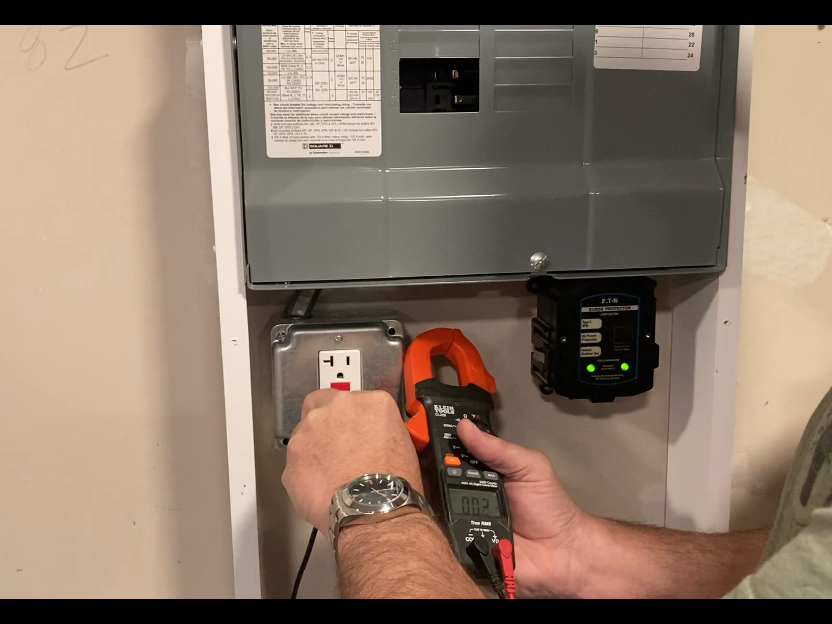
A GFCI watches the current going out—and coming back.
If a hair dryer draws 8 amps, the GFCI expects approximately 8 amps to return through the neutral conductor. When those amounts match, the circuit appears balanced.
DRYER→
Why the plastic bucket changed everything.
The water was energized, but the plastic bucket did not necessarily provide a sufficiently conductive route to ground. Without current escaping the intended hot-to-neutral path, the GFCI had no qualifying imbalance to detect.
“The GFI never saw a current loss.”— James Adams
Then they added a path to ground.
A grounded conductor connected the energized water to a grounded metal box. Current finally had an unintended return path. The balance changed, and the GFCI opened the circuit immediately.
You could become the path.
Bathrooms bring people, grounded surfaces, water, and electrical equipment into close proximity. A wet appliance may not trip protection until an unintended current path exists. That path could be a person.
If an electrical appliance falls into water
- Do not touch the water or appliance.Never reach in, even if the GFCI appears to have tripped.
- Keep everyone away.Treat the entire area as energized until power is safely isolated.
- Get qualified help.If you cannot verify safe disconnection, call an electrician or emergency services.
- Retire the immersed appliance.Internal damage can remain even when the outside looks dry.
Make your home safer with a licensed electrician.
Request electrical service →